
Lansing Directory Collections by Year
The verified Lansing city directory shelf begins with partial and regional sources. No public catalog inspected for this project lists a complete annual run of local volumes, reverse books, school yearbooks, or obituary files. The right approach is to use the confirmed years below, then ask the repository for its publisher, call number, format, and missing years before planning an in-person visit.
| Historical collection | Verified date span | Repository | How to use it |
|---|---|---|---|
| Historic Lansing Journal scans | Partial 1935 and 1937 issues | Lansing Historical Society | Free page images for addresses, notices, obituaries, elections, and local events |
| Lansing Journal publication record | Weekly, 1931-1967; Lansing Edition, 1967-1969 | University of Illinois newspaper directory | Publication context; pair with surviving issue images |
| South Suburban white pages | 1959/60, with another reel covering 1958/59-1960 | Library of Congress | Free image browsing by regional exchange heading |
| Telephone books and Calumet Region volumes | Exact Lansing years not listed | South Suburban Genealogical & Historical Society | Request the exact publisher, year, call number, and page image |
| Chicago Tribune | Historical 1849-2014; current 1985-present | Lansing Public Library databases | Library access for notices, obituaries, businesses, and address clues |
| Federal population census | Public schedules through 1950 | National Archives and licensed library databases | Cross-check household and township on the original census image |
| Obituary files | Some local papers since 1968 | SSGHS | Ask which titles and years are indexed; no complete Lansing index is confirmed |
These entries are coverage facts, not a promise that every Lansing name appears. Telephone books miss unlisted subscribers. Newspaper scans lack full OCR in some runs. Census schedules were taken on one date and use their own geography. A repository's general description of Calumet Region material does not prove that it holds every Lansing edition.
Lansing Library History Sources
The Lansing Public Library at 2750 Indiana Avenue is the first local reference stop. Its database page lists Ancestry Library Edition for in-library use, the Chicago Tribune historical file from 1849 through 2014, a current Tribune file from 1985 onward, Newspaper Source, Lansing Journal access from 2017 onward, and links for census, vital, church, court, and immigration research. The public page does not publish a full local shelf list, so a precise question is more useful than asking whether the library has “old records.”
The Lansing Library database directory shows which genealogy and newspaper tools are available and where in-library access applies.
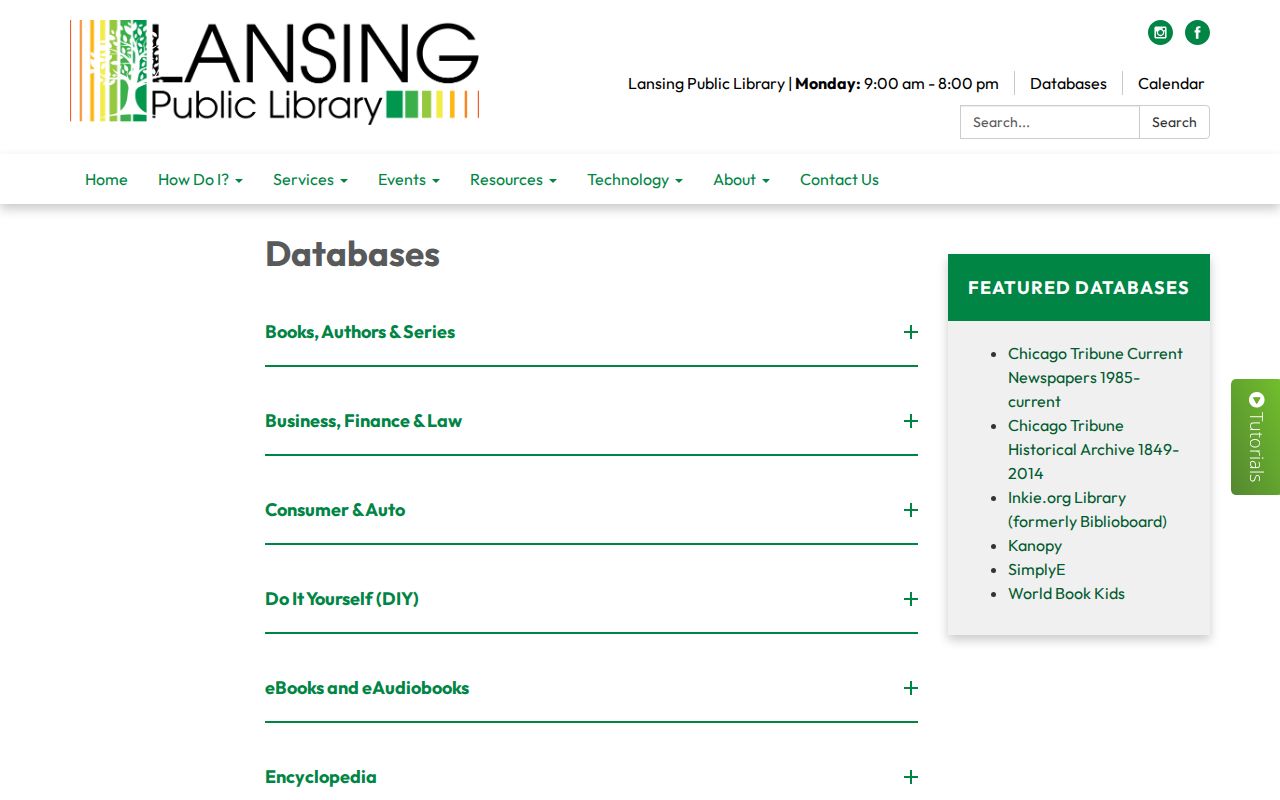
The database screen is the access route, while the collection title, edition date, image number, and library-access rule belong in the research notes.
Ask the reference desk for Lansing, Thornton Township, Calumet Region, and South Suburban directories. Include reverse or criss-cross volumes, telephone books, yearbooks, obituary files, local maps, and microfilm in the request. A “not held” response is still useful because it narrows the next call to the Historical Society or SSGHS.
The Lansing Public Library homepage provides the current contact and service starting point.
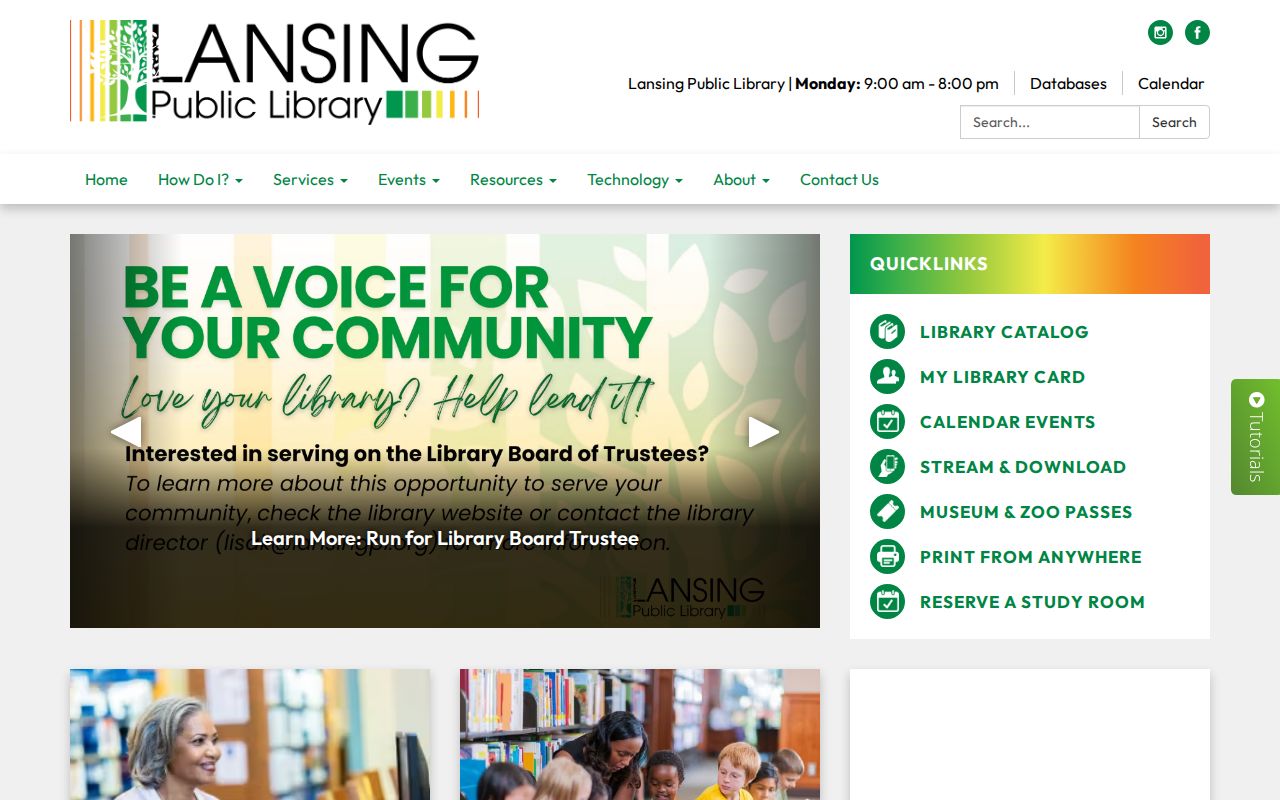
Check current hours and database access before visiting, since licensed tools and local-history material may have different use rules.
Lansing Directory Clues in Newspapers
The Historic Lansing Journal fills a real gap in the directory shelf. The Lansing Historical Society links a partial run from July through December 1935 and listed 1937 issues with gaps. Page images can contain street addresses, obituaries, civic notices, election and precinct information, school news, businesses, and legal notices. They are not a complete name index. When OCR is absent or weak, search by page and preserve the issue date, headline, page image, and exact printed address.
The Historical Society digitized documents page links the surviving Historic Lansing Journal scans.
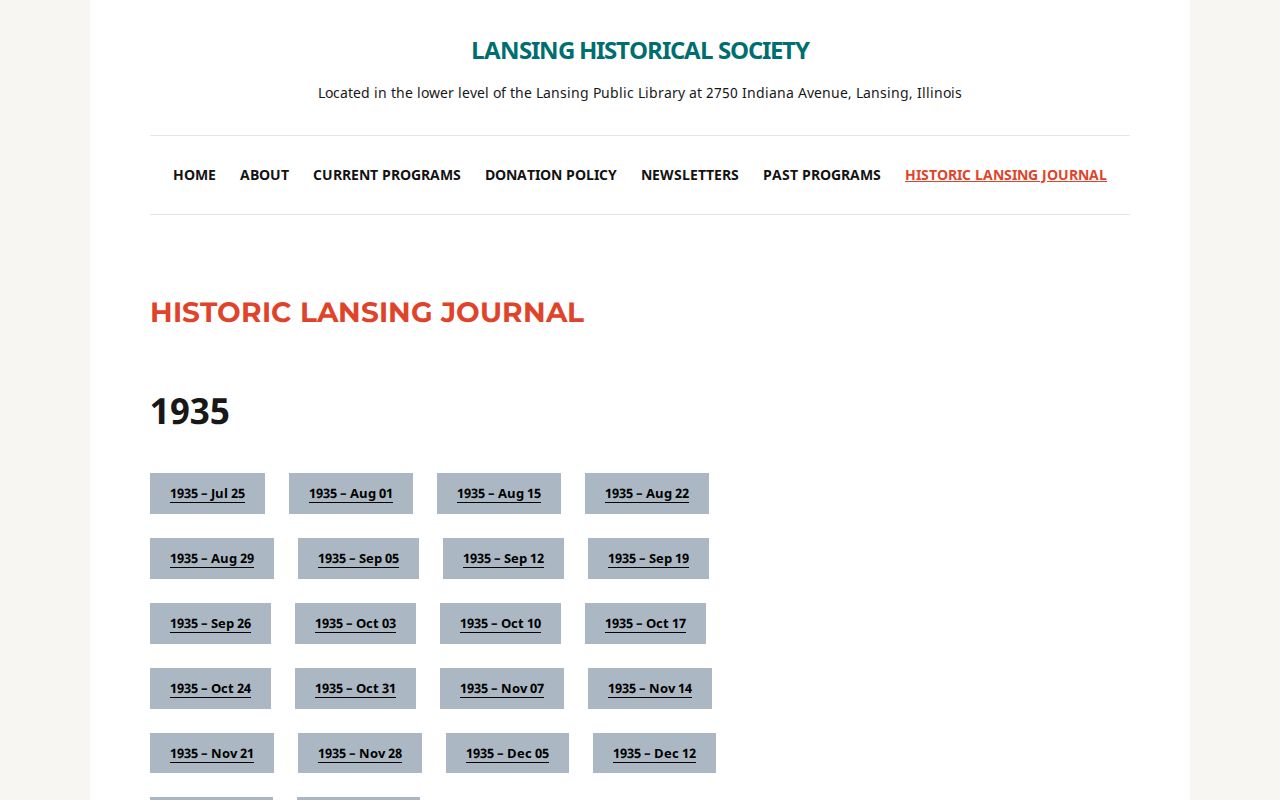
These scans can confirm a dated local event or address, but the missing issues must remain visible in any conclusion.
Search a name in several forms: full given name, initials, surname variants, spouse or relative, church, cemetery, funeral home, business, and street. An obituary is a family-supplied account and may name a prior home. A legal notice may use a parcel description rather than a postal address. Pair either one with a census, deed, church register, or directory page before treating it as proof of residence.
Read Lansing's 1959/60 Directory
The Library of Congress has a 354-image South Suburban white-pages reel for 1959/60. Its coverage extends well beyond Lansing and includes headings for Burnham, Calumet City, Dyer, East Chicago, Gary, Griffith, Hammond, Highland, Munster, Schererville, Whiting, and other exchange areas. Always capture the page heading. A line under a regional telephone exchange is not by itself proof that the address sat within Lansing's incorporated limits.
A Lansing line can show surname, given name or initials, house number and street, an abbreviated city label such as Lansng, and an exchange or telephone number using forms such as GR or GRnit. Keep those abbreviations exactly as printed. Do not silently modernize the city or number. Search both surname and street, and inspect nearby lines because an exchange heading or page break may change the meaning.
| Name | Printed surname and given name or initials; retain titles and punctuation. |
|---|---|
| Street line | House number and street as printed in that edition. |
| City label | An abbreviated place such as Lansng, which may describe the exchange area. |
| Telephone | Exchange letters and digits used at publication time. |
| Source control | Reel title, image number, page heading, and access date. |
A business listing can share an address with a home, and initials do not prove a family relationship. Later publishers may use spouse, occupation, owner, or renter marks, but those fields should be claimed only after the volume's own abbreviation key confirms them.
Decode a Lansing City Directory
Older formats vary from one publisher and era to another. Begin with the title page and abbreviation key, then make a literal transcription before interpreting the line. This keeps a printed quirk from becoming a false modern fact. When a volume includes an occupation, spouse, owner mark, widow notation, or boarding symbol, quote the mark and explain its meaning from that edition.
- Criss-cross directory
- A book arranged by address or telephone number, useful for finding a historical subscriber when the place is known.
- Householder index
- A section that groups the named person associated with a residence, using the publisher's own rules.
- Abbreviation key
- The volume's legend for place names, occupations, household terms, and status marks.
- White pages
- A telephone subscriber list, not a census of every person in a household.
Record whether the line comes from a printed volume, white pages, business section, reverse listing, newspaper ad, or later transcription. These source types answer different questions. A subscriber line dates a listed telephone account. It does not show all household members, prove ownership, or establish that the person remained there after publication.
Lansing Museum and Regional Holdings
The Lansing Historical Society museum works with the public library and points researchers to local publications such as Lansing, Illinois, Legendary Locals of Lansing, and Bicentennial Reflections. Those books can identify public figures, institutions, street history, photographs, and source leads. They should lead back to the original directory, newspaper, deed, church, or census page when a person-to-address statement matters.
The Lansing Historical Society museum page gives the local collection and contact route.
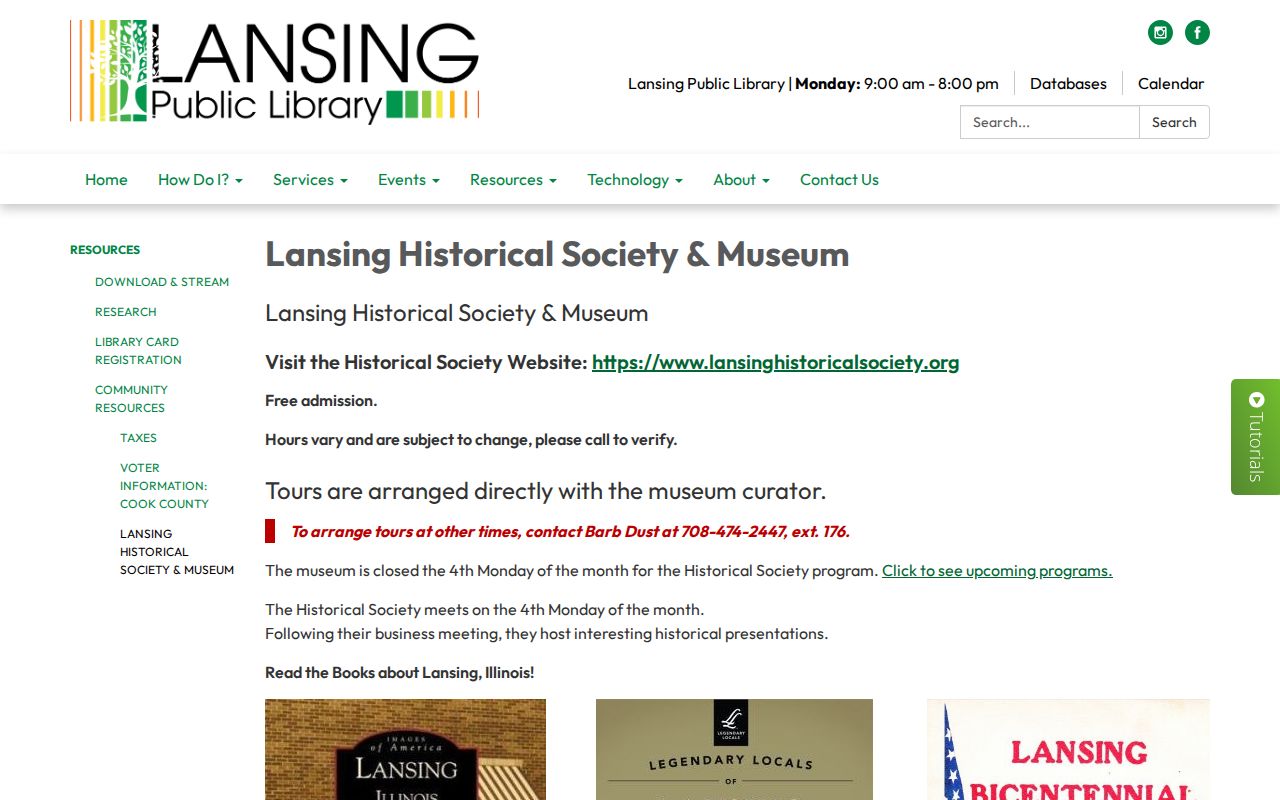
The museum is a strong place to ask about photographs, books, newspaper issues, and original local references that do not appear in a web index.
SSGHS at 3000 West 170th Place in Hazel Crest describes southern Cook County histories, census material, newspapers, cemetery readings, plats, telephone books, Calumet Region volumes, and some obituary files. Contact the society for a finding aid or page image. Its public description also names a Calumet City naturalization series from 1929 through 1954, which must not be generalized into a Lansing collection.
Lansing Records Lost and Saved
Cemetery and church records can resolve a directory disappearance, but Lansing has a cautionary local story. The First Church Presbyterian cemetery at Ridge and Burnham dates to about 1860. A Lansing Journal account says a 1945 fire badly damaged church records, and later road and sidewalk changes affected the burial ground. About 90 legible profiles remained in the account. That number describes surviving profiles in one report, not a complete burial list.
Oak Ridge Cemetery at 1881 Thornton-Lansing Road is operated by First Reformed Church South Holland. Oak Glen Cemetery is tied to Oak Glen Lutheran Church. Neither inspected public page offered a complete name index. Ask for the original register, burial permit, plot record, gravestone transcription, or church entry, and state which record was actually seen. A cemetery location does not establish the person's last home.
This record-loss story is why gaps must be reported, not filled. A saved consistory record, newspaper notice, directory line, gravestone, and probate file may disagree or cover different dates. Preserve each date and source role. If only one clue supports the identification, label it as a lead.
Lansing Directory Research Timeline
A compact timeline helps choose the right source without implying that a full city directory survives for every period.
| Period | Verified Lansing research milestone |
|---|---|
| 1860 | Approximate date of the First Church Presbyterian burial ground at Ridge and Burnham. |
| 1931-1969 | University of Illinois directory describes the Lansing Journal and later Lansing Edition publication spans. |
| 1935 and 1937 | Partial Historic Lansing Journal issue images survive through the Historical Society. |
| 1936 | Lansing library began through WPA-era efforts and later moved through earlier temporary sites. |
| 1941 | The library became tax-supported. |
| 1945 | Fire damaged First Church Presbyterian records tied to the cemetery story. |
| 1958/59-1960 | Library of Congress regional telephone reels include Lansing headings and lines. |
| 1976 | The library moved to the building described in its local history. |
The dates show why research moves among newspaper, telephone, church, cemetery, census, and library sources. They do not establish a first or last city directory publication year. That remains a shelf-list question for the library, Historical Society, and SSGHS.
The Illinois newspaper directory record for the Lansing Journal documents the publication history used in this timeline.
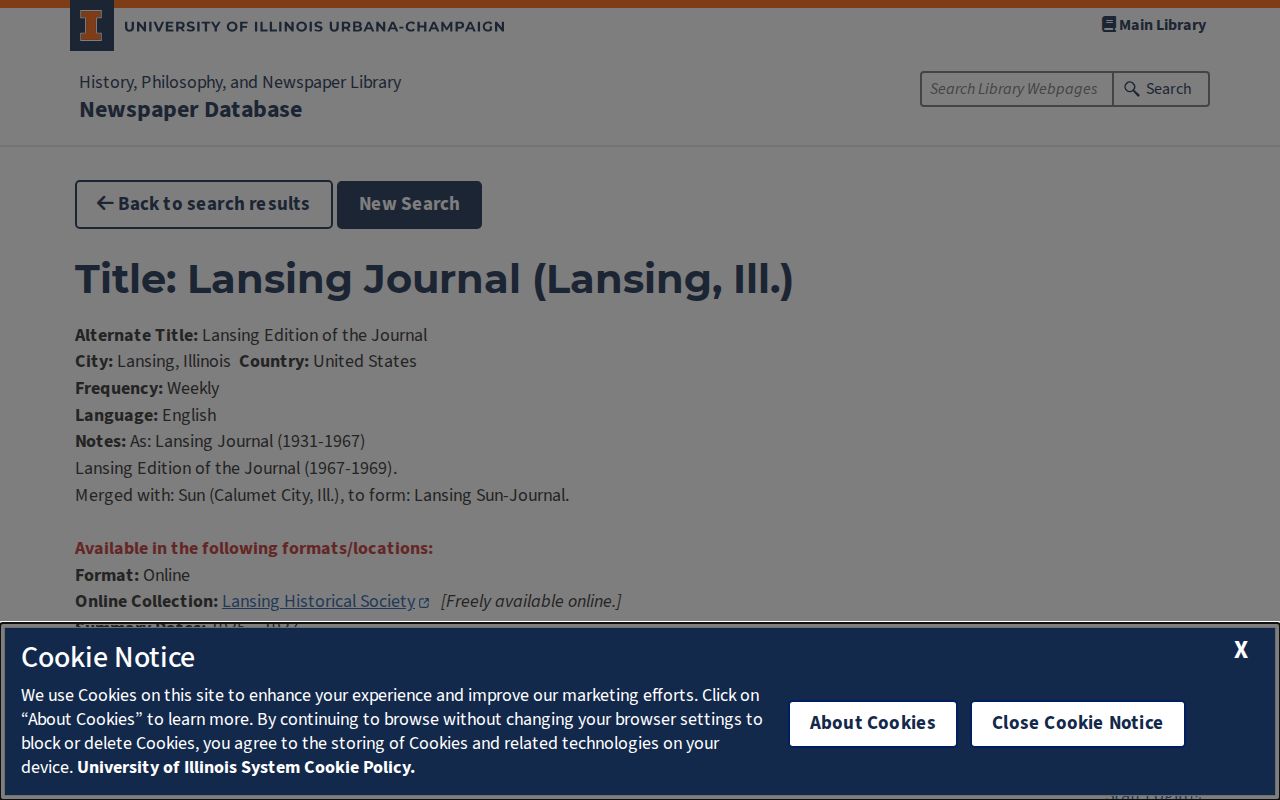
The record supplies publication context, while the Historical Society page supplies the available digitized issues.
Trace Family Through Lansing Directories
Use a two-source rule for any historical resident claim. One source should be close to the date, such as a directory, newspaper, or census. The second should come from a different record family, such as a deed, vital record, church register, cemetery file, or probate case. Matching only a surname is weak, especially when initials, relatives, or spelling variants overlap.
- Find the first reliable name or street line. Transcribe it exactly with edition, page, and image number.
- Search the next available directory or newspaper date. Note a move, new exchange, changed initials, or disappearance without assuming the cause.
- Pair the line with a census schedule through 1950. Record the enumeration district and township shown on the original image.
- Test deeds, probate, obituaries, church, and cemetery sources for a second dated connection.
- Write the result with a confidence label and list any unresolved spelling, boundary, or missing-year issue.
A missing line can mean a move, death, unlisted telephone, absent edition, publisher omission, or a search error. It does not have one automatic meaning. If the project shifts to modern parcel and address evidence, the Lansing street directory owns that current address-keyed workflow.